Posts

Solving parking issues in sectional title schemes

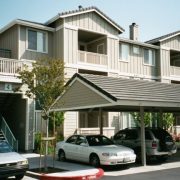
The allocation, use and maintenance of parking bays in sectional title schemes can be a constant source of conflict. Understanding the law governing their use could resolve a lot of this conflict.

Many sectional title schemes have a recurring problem in common, and that is the debate of who decides on the parts of the scheme that will be allocated to parking, who is allowed to use these bays and who is responsible for their maintenance, says Michael Bauer, general manager of property management company IHFM.

The type of ownership of the parking bays is important, as this determines what is done with the bay in question. Many bays are common property or are exclusive use areas (either rule created or as registered as a real right) allocated to a specific unit. In addition to problems of who is responsible for the maintenance or upkeep, there are often parking shortages within schemes, and this needs to be dealt this fairly and equitably, said Bauer.

There are two phases whereby allocation of bays is decided: either before registration of the body corporate or after.

The first instance is when the developer is in the process of registering the scheme with the Deeds Office and laying out the sectional plan. If exclusive use areas on the common property are referred to then the developer imposes a condition whereby the right to exclusive use is conferred to the owner of a particular section and this is done via a unilateral notarial deed.

After registration of the scheme, the process is very different and much more difficult. The developer may have made management or conduct rules pertaining to exclusive use rights and enjoyment of parts of the common property. These rules should include a sketch plan which clearly demarcates where the exclusive use areas are (i.e. parking bays), what these areas are used for and a schedule of owners the areas are allocated to. If, for any reason the rules are amended or rights changed, there must be a corresponding resolution from the owners to this effect and the amended rules with an application form must be now submitted to the Community Schemes Ombud Service, who will check the rules first and, hopefully, approve them.

The owner with a right to exclusive use of a parking bay is responsible for the upkeep of this area and liable to pay an exclusive use levy – and if he refuses to do so the body corporate may, after writing to him first to remind him of his duty to keep up the good state and appearance of the area, effect any maintenance necessary at the owner’s cost.

It also has to be remembered that the body corporate has a right to ask the owner using the exclusive use area for additional contributions to the body corporate fund, said Bauer.

Source: Link

Pet Ownership in sectional title schemes

Pets are considered a part of the family by many and disputes around them can be an emotive issue. The STSMA lays down the rules regarding pets in sectional title schemes.


Of the various disputes dealt with in sectional title schemes, it could possibly be said that those involving pets is high, and it possibly for this reason that the rules dealing with pets is at the top of the list in the Sectional Title Schemes Management Act, says Michael Bauer, general manager of property management company IHFM.


Turning to the courts


There have been many cases where the owners of pets have been willing and able to afford taking their dispute to court, as it has been very important for them to keep their pets with them. There have, too, been cases where the body corporate has had to present their case in court for the removal of a pet. Either way, it is an expensive and time consuming exercise, which should be avoided if at all possible, says Bauer.


The STMSA and pets


In the STSMA Regulations, Annexure 2 Model Conduct Rules, it stipulates that owners or tenants in units must have the trustees’ written consent to keep a pet. While the trustees cannot be unreasonable in withholding consent for this, they do have to consider the circumstances of the request and the best interests of the scheme. When allowing occupants in sectional title schemes to keep pets, they could stipulate that certain conditions must be met by the owner of the pet and if these are not adhered to, the consent could be withdrawn.


Guide dogs, hearing dogs and service dogs


There is an addition, Rule 1(2), which says that consent is automatically given if the pet is a guide dog, hearing dog or service dog. There are increasing cases where dogs are used to alert epileptic sufferers of impending attacks, or diabetic owners of blood sugar level problems, and therapy dogs used to help those who suffer from anxiety and depression related disorders. The owner should be able to present proof of the disability the dog assists with.


Obligations of pet owners


The STSMA does stipulate that pets must not inconvenience other owners. Owners should have a sense of obligation to clean up after their pet and keep it under control at all times.


Adding a “no pets” clause


If the owners of units in a sectional title scheme are adamant that they want a pet free complex, in order to include a “no pets” clause in the rules there needs to be a special resolution taken. To do this there has to be a quorum, then 75% of those present must be in favour of the rule – both in value and number.


Breaching the rules


If any owner breaches the rules by keeping pets without permission or has a pet that disturbs others, the body corporate can either apply to the Community Schemes Ombud Service for assistance in dealing with the matter or turn to private arbitration or the courts to have the pet removed.

Pets have in many households become “members” of the family and this is a highly emotive issue. When addressing a dispute that involves a pet, there has to be clear reasons from each party stating grievances and solutions, to come to a solution quickly and effectively, says Bauer.


Source: Link

Sectional Title: The role of the Body Corporate explained

In the past 10 years, the number of sectional title schemes in SA has risen exponentially, and the latest figures show that there are currently well over 700 000 sectional title homes in the country, estimated to house more than 6-million people.

“What is more,” says Bill Rawson, chairman of the Rawson Property Group, “property data company Lightstone puts the total value of sectional title property at around R665-billion, so it is increasingly important for the owners of sectional title units, and the banks that hold the mortgages on 58% of them, to understand how sectional title schemes are supposed to be set up and run.

“However, there is still widespread misunderstanding of even the basics, starting with the Body Corporate and how it is established, as well as what its functions and powers are. And this often gives rise to many problems and disputes in sectional title schemes which could quite easily have been avoided.

Quite simply, he says, the Body Corporate of each sectional title scheme is made up of all the unit owners in that development, and it is legally responsible for the day-to-day and financial management of the scheme.
“It is established – automatically – when the first unit transfer from the developer of a sectional title scheme to a new owner is registered, and then it steadily gains more members until the last unit is sold and transferred, at which point the developer or development company ceases to be a member.”

The designated tasks of the Body Corporate, Rawson notes, include the following:

To ensure the payment of any levies and other contributions owed to the scheme and any interest payable on arrears;

  • To set up bank accounts for the scheme and ensure that its finances are properly managed;
  • To arrange insurance for the scheme and ensure that the annual or monthly premiums are paid;
  • To arrange with the local authority for the bulk supply of services such as electricity, water and rubbish removal and ensure that the accounts for such services are paid;
  • To establish and maintain the scheme’s common property, including gardens, passageways, lifts, security equipment and recreational facilities, for the benefit and use of all residents;
  • To select, hire, oversee and pay any suppliers, service providers and contractors who may be needed to perform work for the scheme;
  • To appoint agents and employees to assist in the running of the scheme if necessary;
  • To borrow money if necessary to improve the scheme or put it on a sound financial footing;
  • To do all that is necessary to enforce the rules of the scheme;
  • To establish a reserve fund as stipulated by the Sectional Titles Amendment Act and invest any surplus funds on behalf of the scheme; and
  • To ensure that the scheme meets its obligations as regards registration and payment of the required fees to the office of the Community Schemes Ombud.


“However, this is by no means an exhaustive list and in bigger sectional title schemes especially, it would be very impractical for every owner to be involved in day-to-day operations and decisions, so the Body Corporate will usually elect a smaller group of owners as Trustees to act on its behalf.
“Sectional title legislation makes provision for this and gives Trustees the power to make certain decisions without always having to revert back to the Body Corporate for a mandate.”

And by and large, he says, Trustees work very hard on behalf of their fellow-owners and try their best to protect and enhance the value of everyone’s investment. “But the fact remains that most are amateurs when it comes to real estate. It is also becoming difficult to comply with all the requirements of the increasingly complex Sectional Title legislation, so most Trustees (and Bodies Corporate) could really do with the help of a professional managing agent.

“Time and again it has been shown that sectional title schemes that employ competent managing agents have fewer problems with levy arrears, for example, and are also cleaner, more secure and better maintained – and this should please even those members of the BodyCorporate who are not interested in serving as Trustees themselves.

“However, Trustees do need to check the credentials and references of managing agents very carefully before making any appointment, and must ensure that their agent is a member of the National Association of Managing Agents with a valid and current Fidelity Fund Certificate.”


Source: Link

The Body Corporate must be contactable

Latin phrases, as we well know, are much liked by those who draw up legal agreements – but they do have a tendency to confuse the average reader. A phrase which is of particular relevance for sectional title trustees and sectional title owners owning sectional title property is the domicilium citandi et executandi.

Michael Bauer, GM of IHFM, a Cape sectional title management firm, explains that the Prescribed Management Rule (PMR) No 3 stipulates, by means of this phrase, that the trustees and owners have to let those who need to communicate with them know where they are.

“It ensures that they will be contactable.”

The owners have to be told the domicilium citandi et executandi of the body corporate, i.e. its registered physical address at the Annual General Meeting (AGM) and this has to be in the same magisterial district as the sectional title scheme or, alternatively, where the managing agent operates from. It must, too, be the physical address of either the body corporate’s chairman, a resident trustee or the offices of the managing agent.

Should the address change, the trustees are required by law to inform all owners/members in writing as well as the Registrar of Deeds at the local authority.

In the case of sectional title owners, their domicilium citandi et executandi is by default the physical address of the section registered in their name. This address can be changed by the owner, but it has always to be in the Republic of South Africa and the body corporate must receive notice of this in writing.

Bauer points out that a fair number of owners in fact do not live in the unit or live overseas. Owners need to be aware that it is their responsibility to update the trustees on their contact details periodically. Owners have to bear in mind that in 1986, when the sectional title act was promulgated, electronic communication did not exist in its present form so it is still necessary to do this in writing.

In case of owners living overseas, correspondence will still legally be addressed to the unit they own locally and they have a duty to see that such information is forwarded to them. The greater use of email has, however, reduced communication problems here.

Source: Link

Rules for smoking or braaiing in Sectional Title schemes

The Sectional Title Schemes Management act is a breath of fresh air for residents that are bothered by their neighbour’s smoke.

Living in close proximity to neighbours, which is what sectional title living often is, can sometimes bring situations to the fore that might seem trivial to some, but might affect some more seriously than others think.

An example of those contentious issues where there are two very opposing factions are smokers vs non-smokers and those who like to braai and those who don’t. These activities can affect the neighbours negatively, and those taking part in the activity don’t realise just how negative the impact can be, says Michael Bauer, general manager of property management company IHFM.

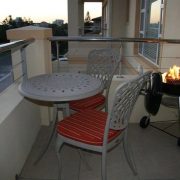
An example of this is if there is a party and smokers go outside to smoke, or if a couple is hosting a braai on their balcony; the smoke will waft upwards – compromising the enjoyment of the upstairs occupants’ use of their balcony. The cigarette or braai smoke could even go through the upstairs windows into the apartment, and could create an unpleasant environment for anyone upstairs. This is why sectional title schemes often ban smoking or braaiing on balconies, not to be unreasonable, but to consider all the occupants within the scheme.

In the Sectional Titles Schemes Management Act, Rule 30(e) under the section dealing with the use of sections and common property, it states that anything causing a “material negative effect” on the value or utility of any other section or exclusive use area is prohibited.

If one owner had to bring a complaint forward against another owner, the negative effect would have to be considered, how frequent the events take place, the number of people smoking, whether the person affected has a health condition which could be worsened by being exposed to smoke, and so on.

As in many subjective situations, said Bauer, the factors that the Ombudsman will look at will be whether the complaint or defence is “reasonable” or not. However, before any case is taken to the Ombud, there should be some attempt to resolve disputes within the scheme first.

It should be remembered, that living in a sectional title scheme has limitations on some behaviour and each action should be considered – in how it affects others, said Bauer.

Source: Link

Here’s what to do when no one wants to be trustee

Fewer sectional title owners are prepared to take on the responsibility of being a trustee. Fortunately, a new management rule can save the day.

It is unfortunate that the increasing popularity of Sectional Title (ST) living in SA over the past 15 to 20 years has not been accompanied by similar growth in the number of ST owners who are qualified or even willing to act as trustees, and an increasing number of schemes are now turning to a new and little-known management rule to resolve the problem.

That’s the word from Andrew Schaefer, MD of national property management company Trafalgar*, who says the whole ST “system” in SA is designed around the trustees elected by owners to manage the affairs of their ST schemes – and that things can quickly start to unravel when there are too few people willing to take on the responsibility.

“Effective trustees are the backbone of ST living and ultimately responsible for protecting home values in ST schemes. Even the ST legislation is written to empower the trustees to do certain things on behalf of the other owners, from collecting levies, setting budgets and enforcing conduct rules to organising the maintenance of the common property, arranging for any repairs necessary and appointing a managing agent.”

However, he notes, acting as a trustee – which is a voluntary, after hours and unpaid position – has become an increasingly complicated, time-consuming and often thankless job, with the result that an increasing number of schemes are now struggling to find enough people willing to take it on.

“And that could become a real problem for the sector, which currently accounts for around 40% of all new residential construction and an estimated R650bn worth of existing homes – unless more schemes start to make use of Prescribed Management Rule (PMR) 28, promulgated in October 2016.”

Schaefer says that under the Sectional Titles Schemes Management Act (STSMA) which came into operation last year, this little-known PMR provides for the owners that make up the body corporate to take a special resolution to appoint an “executive managing agent” to perform the functions and exercise the powers that would otherwise be performed and exercised by the trustees.

“Alternatively, if there are not even enough interested owners to hold a meeting and pass the special resolution, owners who collectively hold 25% of the scheme’s total participation quota can apply to the Community Schemes Ombud Service for the appointment of an executive managing agent.”

Trfexecman 2 last

In terms of the rule, he says, this executive managing agent is:

  • Subject to all the duties and obligations of a trustee under the STSMA and the rules of the scheme;
  • Obliged to manage the scheme with the required professional level of skill and care;
  • Liable for any loss suffered by the body corporate as a result of not applying such skill and care;
  • Obliged to arrange for the inspection of the common property at least every six months; and
  • Obliged to report to all the members of the body corporate every four months on the decisions taken with regard to the administration of the scheme and its finances, and the balance of its reserve and administrative funds.

“In short, the executive managing agent must be prepared to carry quite a heavy burden. So although the rule does provides an handy solution for bodies corporate that don’t have enough trustees, it is clearly also intended to ensure that they don’t make random appointments, but rather seek professional assistance from a property management company such as Trafalgar, which has the all necessary resources and systems in place to fulfil these obligations.”

Indeed, Shaefer says, the company is already acting as executive managing agent for several ST schemes, and the number of enquiries with regard to this service is increasing monthly


Source: Link